
Homemade Electrolytes for Dogs – Are They Safe?
Diarrhoea can cause a dog to lose water and electrolytes. Mild cases may settle quickly, but significant dehydration cannot be safely corrected with a homemade salt-and-sugar mixture and may require veterinary treatment.
Do Not Make a Homemade Electrolyte Solution
Do not give a dog a homemade electrolyte drink made with salt and sugar unless your vet has provided the exact recipe for that individual dog.
An incorrectly measured mixture can contain too much sodium or sugar, worsen diarrhoea or create a dangerous electrolyte imbalance.
Human sports drinks and human rehydration products may also contain unsuitable amounts of sugar and salt, sweeteners such as xylitol, or other ingredients that are unsafe for dogs.
What You Can Offer
Keep clean, fresh drinking water available unless your veterinary surgeon advises otherwise. Do not routinely withhold water from a dog with diarrhoea.
If your dog is also vomiting, allowing a large drink at once may trigger further vomiting. Contact your vet for advice. They may recommend offering small amounts of water frequently while arranging an examination.
A veterinary oral rehydration product should only be used according to its instructions and your vet’s advice.
Oralade is one veterinary oral rehydration product that may be recommended for dogs with diarrhoea, vomiting, nausea or reduced fluid intake. It provides water, electrolytes and simple sugars in an isotonic solution designed to support hydration. Oralade is available direct from the manufacturer, from most veterinary practices and online from veterinary chemists - Viovet, Animed, Hyperdrug, as well as Amazon.
Furr Boost is another option for encouraging dogs to take in additional fluids, particularly dogs that are reluctant to drink plain water or have a reduced appetite. It is a high-moisture complementary dog drink made with ingredients such as meat or fish, vegetables and fruit, together with added vitamins, oils and prebiotics.
It can be offered as a drink, added to food as a topper, or frozen, and may be useful for increasing a dog's overall fluid intake.
Furr Boost should not, however, be regarded as a replacement for a veterinary oral rehydration product such as Oralade when specific electrolyte replacement is required, or for veterinary fluid therapy in a dehydrated or unwell dog. Fresh drinking water should always remain available.
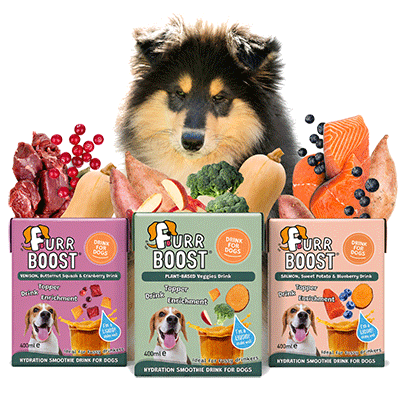
Click link above to get 15% off your first order of Furr Boost
Benefits - Maintain healthy gut motility and nourish enterocytes during convalescence.
Highly palatable and ideal for encouraging pets with appetite loss to eat and drink.
75% of ingredients in each carton are hydrating moisture content used to replenish lost fluid and nutrients.
High quality Flaxseed, Dried Sea Kelp and natural oils from Salmon and Coconut to keep skin hydrated and coats glossy.
All flavours contain Sea Kelp, Beta Glucan and Vitamin C, which support a healthy immune system.
Oralade is available as a ready-to-serve liquid and in concentrated forms that are mixed with the stated amount of water before use. Always follow the preparation and feeding instructions on the product, or the advice given by your veterinary surgeon.
It is not a substitute for intravenous fluids when a dog is significantly dehydrated or unable to keep fluids down.
Goat’s Milk When Travelling
Some dogs are reluctant to drink plain water when away from home, particularly when travelling, attending shows or spending the day somewhere unfamiliar. Taking something they find more appealing can be a useful way of encouraging them to take in additional fluids.
Powdered goat’s milk formulated for dogs can be particularly convenient as it is easy to carry and can simply be mixed with fresh water when required. Some products also contain added probiotics, vitamins and minerals, so check the ingredients and preparation instructions for the particular product you are using. Goat’s milk should be regarded as an additional way of encouraging fluid intake rather than a replacement for fresh drinking water or a veterinary oral rehydration solution when a dog is dehydrated or unwell. Some adult dogs may also be sensitive to lactose, so introduce it cautiously if your dog has not had it before.
Possible Signs of Dehydration
- Dry or sticky gums
- Reduced energy or weakness
- Sunken-looking eyes
- Reduced urination
- Poor appetite
- Skin that returns slowly after being gently lifted
These checks are not completely reliable, particularly in puppies, elderly dogs and overweight dogs. A veterinary examination is the safest way to assess dehydration.
When to Contact Your Vet
Seek veterinary advice promptly if your dog has:
- Blood in the diarrhoea or black, tar-like stools
- Repeated vomiting or an inability to keep water down
- Severe, frequent or very watery diarrhoea
- Abdominal pain or a swollen abdomen
- Lethargy, weakness, pale gums or collapse
- Suspected poisoning or a swallowed foreign object
- Signs of dehydration
- Diarrhoea lasting longer than 24 hours
Puppies, elderly dogs, very small dogs and dogs with another medical condition can deteriorate more quickly and should be discussed with a vet sooner.
Veterinary Treatment
Treatment depends on the cause and severity. Your vet may recommend examination of a stool sample, blood tests, medication for nausea, dietary management or parasite treatment.
A dehydrated dog may require fluids under the skin or directly into a vein. Intravenous fluids allow water and individual electrolytes to be corrected at a controlled rate while the dog is monitored.
