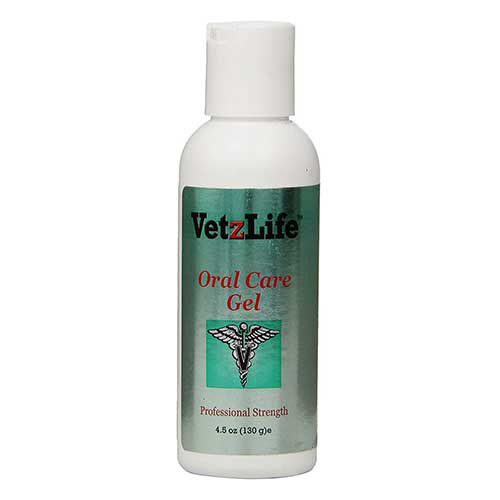
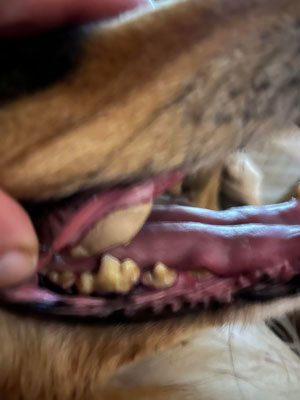
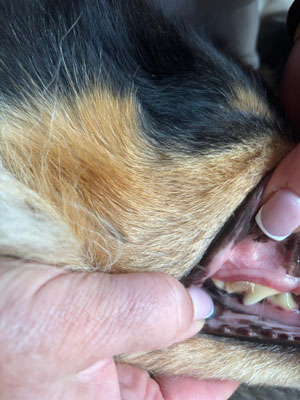
DOGS TEETH CLEANING AND PLAQUE BUILD UP There are many products on the market that will purportedly remove plaque from your dogs teeth and keep them clean. Some products will soften and loosen the tartar and once soft and loose will often come off quickly and cleanly when a dog chews on a good bone. Petzlife gel and spray works well at softening tartar, and along with a chew on an Ostrich bones your dog will have super healthy clean teeth.
Petzlife Dental Gel How to use HERE
Ostrich bones are 100% pure air-dried Ostrich thigh bone. Nothing added, and apart from moisture, nothing taken away.
Teeth can also become discoloured, and although there are many reasons for instrinsic discolouration, it is mainly due to food, some kibble fed dogs in particular can get badly discoloured teeth. There has always been an assumption that feeding a dog kibble will help keep their teeth clean. This seems to rest on the principle that as the dog crunches down, the pieces of kibble will scrape the teeth clean. Some of the prescription dental diets may help to keep the dogs teeth clean, and there are seven diets that have been certified by the Veterinary Oral Health Council. There is no evidence-based research that supports the claim that eating kibble helps prevent dental disease. Wild carnivores chew on bones, tendons, ligaments and cartilage that help strip the teeth of debris. Regular kibble dog food, although crunchy, sticks to a dog’s teeth like any other food does. Saying regular kibble food cleans canine teeth is like saying Cheerios can clean human teeth. The myth, and the math, don’t add up: remember, 80% of dogs have oral disease by age three. Since most dogs eat commercial dry food, it’s hard to see anything but a reverse correlation between kibble and dental health. After a dog eats any food, tiny bits of the food are left behind on the teeth. These food particles mix with bacteria in the mouth, collecting along the gum line. If the teeth are not brushed soon after eating, the food residue forms a soft film called plaque. Plaque can be brushed away, but only if you get to it before it hardens into tartar, which is calcified and very hard. When tartar (also known as calculus) develops beneath the gum line it causes gingivitis (bleeding and inflammation of the gums). If allowed to progress, gingivitis can cause periodontitis. This serious dental disease causes infection and tooth loss. Periodontal disease is also associated with cardiopulmonary disease and other disorders. Kibble is an ultra-processed food and as such can contain substances that actually fuel inflammation in the body, including in the tissues of the mouth. Most kibble is starchy, and full of fillers that break down to sugar, which contributes to plaque and bacteria. One way you can can help prevent dental disease, gingivitis and periodontitis is daily teeth brushing at home. While dogs are subject to the same process that drives dental disease that humans are, most pet owners don’t brush their dog’s teeth daily. When brushing, you’re preventing the plaque from accumulating, If you brush with enough frequency, you’ll break up the initial plaque before it turns into tartar. Dog toothpastes come in many flavours like poultry and beef. While brushing a dog’s teeth sounds complicated, it all comes down to habit. Try brushing your dog’s teeth at the same time every day, either right after they eat dinner or maybe just before bed when you brush your own teeth. Fragaria is a traditional homeopathic remedy associated with the teeth, and commonly known as the wild strawberry. It will soften and aid the removal of tartar on encrusted teeth and to slow down and prevent the formation of new plaque deposits.
|