
The Potential Benefits of a Raw Food Diet for Dogs
Ask a group of people what they recommend feeding a dog and you will receive many different answers. Most owners feed what they believe is best while also considering their budget, lifestyle and the needs of their individual dogs.
Kibble is convenient, widely available and can provide a complete diet in one product. Raw feeding is chosen by owners who prefer to offer fresh, minimally processed animal-based foods.
Both approaches have advantages and disadvantages. What works well for one dog or household may not be the right choice for another.
| Consideration | Raw Diet | Kibble |
|---|---|---|
| Processing | Fresh or frozen and generally minimally processed | Cooked and processed into a dry, shelf-stable food |
| Convenience | Requires freezer space, defrosting and food hygiene | Easy to store, measure and serve |
| Moisture | Naturally contains a high proportion of moisture | Contains relatively little moisture |
| Balance | Must be properly formulated or purchased as complete | Complete products are formulated to meet nutritional standards |
| Contamination | Raw meat can contain harmful bacteria | Processed food is not sterile and can also become contaminated or be recalled |
Feeding a Natural Raw Diet
For decades, owners have been told that dry pellets are the best and most convenient way to feed a dog. However, some owners question the degree of processing and the amount of grains, starches, legumes, fillers and by-products contained in certain foods.
This has led many people to explore raw feeding as a fresher, less processed alternative. The ingredients and quality of both raw food and kibble vary considerably, so individual products should be judged upon their contents rather than marketing claims alone.
Benefits Commonly Reported by Raw Feeders
- Firmer, smaller and less odorous stools
- Improved appetite and enjoyment of meals
- Improved skin and coat condition
- Better weight and muscle control
- Improved digestion in some dogs
- More energy and stamina
- Improved mobility in some older dogs
These are observations reported by owners and should not be treated as a guarantee that every dog will experience the same results.
Is Raw Feeding Inconvenient?
Raw food requires freezer space and advance defrosting, but serving it generally involves weighing the correct portion and placing it into the dog’s bowl. This is not greatly different from weighing kibble to avoid overfeeding.
Raw Meat and Bacteria
Preparing raw dog food is no different from preparing raw meat for your own meals. It should be stored correctly, kept away from ready-to-eat food and prepared using clean hands, utensils and work surfaces.
Raw meat can contain bacteria such as Salmonella, Campylobacter and E. coli. This does not mean that all raw food is contaminated or unsafe, but sensible hygiene is important.
This risk is not exclusive to raw feeding. Kibble is a processed food, but it is not sterile. Kibble, treats and tinned foods can also become contaminated and have occasionally been recalled because of bacteria or other safety concerns.
Many experienced raw feeders find that healthy dogs accustomed to raw food cope well with the bacteria naturally present in meat. Nevertheless, no dog should be considered completely immune to food-borne illness.
Choosing a Supplier
Quality, formulation, delivery and storage standards can vary. I have personally received food from a local supplier that was not properly frozen when delivered, which understandably raised serious concerns.
Always check that frozen food arrives frozen and that its packaging is intact. Keep it at the correct temperature and follow the manufacturer’s storage and defrosting instructions.
After trying different suppliers, I have found Solihull Raw and Birmingham Raw, to offer reliable and consistent quality, both offer free delivery.


For more information about feeding raw green tripe, read the green tripe article.
Raw Feeding—My Personal Experience
For many years, I fed what I believed was a good-quality kibble, supplemented with fresh meat, vegetables and occasional fruit, eggs or sardines.
Over time, I began questioning some of the ingredients found in commercial foods. Although these foods may meet recognised nutritional standards, many are heavily processed and some contain ingredients I did not feel my dogs needed.
After carrying out my own research and speaking with experienced raw feeders, I decided to try my dogs on a raw diet. I initially planned a 60-day trial, but I saw sufficient improvement to continue.

The 80/10/10 Approach
A commonly used raw-feeding ratio consists of:
- 80% muscle meat
- 10% raw bone
- 10% organ meat, usually including liver
This is a general model rather than a guarantee of nutritional completeness. Different dogs and life stages may require adjustments or a more carefully formulated diet.
A typical meal for my dogs may include an 80/10/10 raw mix with occasional additions such as:
- Sardines or sprats
- A raw egg
- Small quantities of suitable fruit or vegetables
- Salmon oil
- Bone broth
- Furr Boost
- Goat’s milk powder
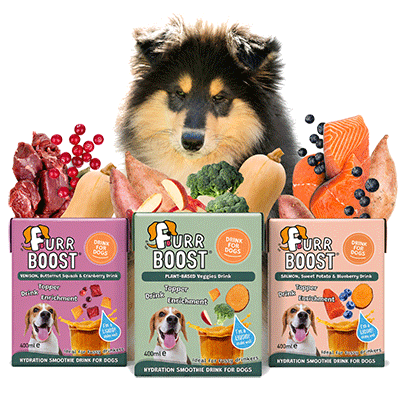
Click link above to get 15% off your first order of Furr Boost
The Difference I Saw
One of my dogs, who is sadly no longer with us, had taken steroid medication for approximately two years because of a suspected allergy or immune problem. She needed regular blood tests to monitor her liver and kidney function.
After changing her diet, I saw a considerable improvement. Her medication was subsequently reduced and stopped, and she had no further recurrence of the original problem. For me, this was one of the clearest indications that the dietary change had suited her.
This is my personal experience and does not prove that a raw diet can replace medication or treat the same condition in another dog. Prescribed medication should be reduced or stopped only in consultation with the veterinary surgeon responsible for the dog’s care.

Julie Growcott
Lillyway Rough Collies
Feeding Dogs Kibble—What to Look For
Kibble remains a practical choice for many owners. A complete kibble is formulated to provide the necessary nutrients in one convenient product, but ingredient quality and nutritional content vary significantly between brands.
Reading the Ingredients
Look for clearly identified animal proteins such as chicken, beef, lamb, turkey or fish. Meat meals can also be concentrated protein sources because much of their water has already been removed.
A suitable food will normally include:
- Clearly identified protein sources
- Suitable fats such as fish oil or chicken fat
- An appropriate source of carbohydrates and fibre
- Vitamins and minerals required to balance the food
- Feeding guidance appropriate to the dog’s life stage
Processed Does Not Mean Sterile
Heat processing reduces many microbiological risks, but kibble is not immune to contamination. Problems can arise from ingredients, manufacturing, storage or contamination after cooking.
Owners should store kibble in accordance with its instructions, check use-by dates, keep bowls and scoops clean and pay attention to manufacturer recall notices.
Grain-Free Does Not Automatically Mean Better
Grains such as rice, oats and barley can provide carbohydrates, fibre and nutrients. Many dogs digest them without difficulty. Grain-free foods commonly replace grains with peas, lentils, chickpeas or potatoes, which are not automatically superior.
Raw Feeding a Pregnant or Nursing Bitch
Pregnancy and lactation place substantial nutritional demands on a bitch. She requires an appropriate balance of energy, protein, fat, vitamins and minerals to support herself and her puppies.
A general 80/10/10 mixture may not automatically provide the correct nutrition for pregnancy, lactation or puppy growth. The entire diet needs to be properly balanced.
Calcium and Eclampsia
Inappropriate calcium supplementation during pregnancy can interfere with normal calcium regulation. However, inadequate nutrition during lactation can also create serious problems.
Do not rely upon eggshell, bones, milk or homemade calcium additions to prevent eclampsia. Seek urgent veterinary care if a nursing bitch becomes restless, pants excessively, trembles, walks stiffly, appears disorientated or has a seizure.
During the later stages of pregnancy, smaller and more frequent meals may be easier for the bitch to manage.
Her energy requirements increase considerably during lactation and are affected by litter size. Monitor her body condition and weight rather than relying solely upon a fixed feeding percentage.
Anyone wishing to raw-feed a pregnant or nursing bitch should use a properly formulated complete diet or obtain appropriate canine nutritional advice.
Sources and Further Reading
Dogs First
Dr Conor Brady
Dr Ian Billinghurst
My own experience
This page discusses different feeding approaches and includes personal experience. It is not intended to replace individual veterinary or professional nutritional advice.